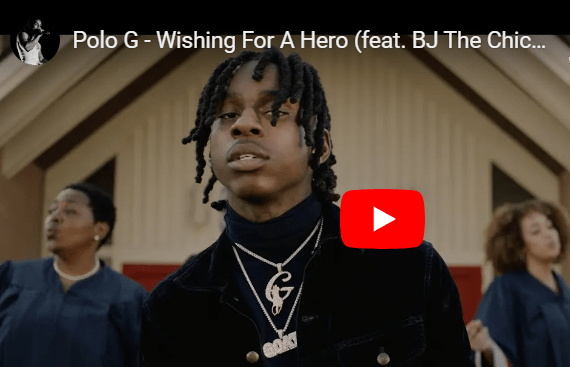
This blog post originates from a drive to Waffle House. I was riding with an old friend of mine and we were talking about songs that flawlessly sampled previous music. He told me that the best example he’d ever heard was this song by Polo G. And naturally when someone tells me about a great song, I have to listen to it immediately. So, I did, and I’ve been a fan of Polo G ever since.
(I already was because of Martin & Gina – IYKYK – but this just made me a super fan.)
In this song, Polo G beautifully and artistically breaks down structural racism in a relatable way. How many artists write songs that are truly heartbreaking and tell tear-jerking stories, but they’re so great at their craft that the song becomes a bop?
Structural oppression: the subjugation of a group at the individual, institutional, and societal or cultural level1. It is not caused by individual choices or bias, but by the rules that constitute and regulate the major sectors of life23. Structural oppression can take different forms, such as racism, sexism, classism, and so on.
Structural racism: the totality of ways in which societies foster racial discrimination through mutually reinforcing systems of housing, education, employment, earnings, benefits, credit, media, health care and criminal justice. These patterns and practices in turn reinforce discriminatory beliefs, values and distribution of resources.
– What is structural racism? | American Medical Association (ama-assn.org)
This experience of being black is something that cannot be understood by someone who isn’t. It’s interesting how as a child I never truly understood it. I didn’t see the difference. Though I felt it, I had no idea what it was that I was feeling. I look at my own son who is completely oblivious to the complexities and adversities that his brown skin has already and will continue to impose on him. I look at him and I tear up at the thought of even the slightest microaggression causing him to develop even an ounce of internalized racism or self-hate.
As a black woman, thinking about structural racism makes me want to crawl into a hole and never come back out. It feels suffocating. Overwhelming.
You ain’t my color, then you don’t know the struggle of livin’ black.
If you are not a person of color, there are some things you’ll never be able to understand, let alone explain.
And while some of the things in this post don’t apply to me directly (or don’t seem to apply to me directly), they apply to either a cousin or a friend or the brother of a friend or my brother in some capacity or the other.
I’ wish I had the I’m surprised I have the energy and dedication to this blog to journal through stereotypes, discrimination, internalizing, power & privilege, oppression, social psychology, adverse impact, and all the things. (Especially tonight. Especially this year.)
All I’m here to say is that, for a number of reasons, structural racism is real. So, let me break down what Polo G is trying to tell us in this artfully crafted record.
(Also shout out to the writers and production team.)
Man, if the police shoot at one of my brothers, I’m blickin’ back
The first thing that comes to my mind when I hear this line is Michelle Obama’s line “ when they go low, we go high”. Because I quite frankly have a conflict of values when I hear this. I believe in showing kindness to even my worst enemy. I believe in karma and God’s plan and letting people reap what they sow. But damn it, enough is enough at some point. Some of the greatest civil rights wins were not accomplished by turning the other cheek. They were accomplished through disruption. Revolutions do not happen when we go high.
Polo G is likening the death of black men at the hands of police to the death of black men by the hands of other black men. He is reminding us that if the police officer were any other adversary, in a neighboring gang or an enemy with a history or whatever the case may be, the answer would be as simple as revenge.
If you’re putting my brother on a T-shirt, I’m putting you on a T-shirt too. The evidence is in families gathered at funerals mourning sons and brothers who died too young. The evidence is in young black men being imprisoned and institutionalized. The evidence is there. A young girl listening to her grandfather mourning the loss of his son, the uncle she barely knew.
In the culture of gangs, there is no protesting, there is no court of law, no union friends to bail you out of the target you put on your back when you chose to pull the trigger. Just retaliation. Retribution.
Polo G is reminding us of the ways the police act as a gang.
They just watchin’ us fail while they sittin’ back
The government cuttin’ checks, but can’t cut a nigga some slack
It’s hard to get a job, so we hustle and flip a pack
It’s all a set-up, no wonder why they call this bitch a trap
Now, again, please remember that Black people, specifically black men, are socialized and stereotyped and marginalized to remain in a hamster wheel of violence, minimal education, survivalism, and so much more.
From the moment the 8-year-old white girl’s parents decided that her new 8-year-old best friend was a danger to her because he’s a black boy.
From the moment that the media cycle began to routinely cover news stories of gang violence in black communities and promoting mainstream movies that depicted black people living in poverty or more violence.
From the moment zoning made it so that schools in areas with primarily communities of color received less resources than schools with predominantly white students.
From the moment the children who grew up in the Jim Crow era, and the children who were in school when they were first integrated, the same students who did not want Black people around, and the children who drank from whites only drinking fountains… the moment those children became the parents and grandparents of the people who currently hold the power to provide education, provide employment, provide funding, provide resources, and in turn the power to revoke or limit any of these things for black people…
From the moment that white people grow up with ingrained stereotypes of black people that are so wildly different from their own white norms and ways of being that they struggle to connect or go out of the way to make relationships with black people… making it so that when it’s time to network or extend opportunities or share resources or build community, that white people will predominantly do that with other white people which naturally results in a hoarding of wealth and resources and funding and employment amongst white communities, which makes it so that people of color continue to face discrimination, hurdles, and more, which stem from all of the horrors and established foundations of slavery and racism in this country.
Structural racism is the combination of individual and institutional racism.
How do we expect black men to get out of it? What recourse do they have?
The wealth gap shows black families have a fraction of the wealth of white families.
In order to obtain a college education, you have to have resources and funding. In order to have resources and funding, you have to be taught where those resources are and have a good high school education. In order to be taught well, you have to have resources and funding. In order to have resources and funding for public school education, your government has to understand the reasons why your communities are underfunded in the first place. Your government has to pay attention, and your government has to empathize.
Now imagine growing up knowing that the truth is your government will not empathize and your government does not care. Imagine knowing that the truth is your government and a lot of the people around you see you as a threat. Imagine growing up, innocent and oblivious, and one day having an experience that makes you realize the world does not see you that way. The world does not see you as innocent or human, the world has instead made you out to be a target and a threat.
Life was messed up, a matter of time ’til that nigga snap
Post-traumatic stress, so them triggers keep gettin’ tapped
Imagine waking up one day and realizing that you can die at any moment and need to always stay vigilant and on defense. How does that influence your ability to be at peace let alone to be well?
Imagine no one ever even introducing resources like grants and scholarships to you. Whereas in white communities, these resources are as well known as the alphabet.
Imagine no one ever investing the time to help you tap into these resources or your own potential, whereas in white communities having a career counselor or therapist is a requirement.
Imagine going your whole life without guaranteed healthcare so never having access to mental health benefits, whereas in white middle class communities, their toddlers have psychologists as soon as they see any sign of emotional turbulence.
After having these realizations, or not even being exposed enough to the way that our society and systems are structured to even know that this is the depth of it, how do you get out of that hamster wheel?
Them corners leave a nigga boxed in, tryna break free
Crazy how I love the same block that tried to break me
Pray that I ain’t in my own hood when they take me
This all we know, a life of peace what we can’t see
I need to do everything I can so that my black son doesn’t end up dead or in jail. These are the realities for parents of black boys. This is what black people are taught and conditioned; keep your head down and be hyper vigilant, and don’t rock the boat so that you are not killed.
This is no hyperbole.
I’ve come so far, it’s easy to look at me and think I came from money. But I am not. We come from poverty. My family in so many ways has hustled to make a way for ourselves. It’s a miracle my grandmother raised 3 boys who didn’t get lost in the cycle of violence and everything else that came from living in Portmore, Jamaica.
Imagine the only community and support and care that you find is in other black men around you, whether those black men are blue-collar workers, drug dealers, or gang members. Imagine if that’s all you know; this is your family. They love you and no one else is offering you any way to improve your life otherwise.
No matter how far we’ve come, I know my family loved, and loves, the communities we come from. We love our humble beginnings, and our neighbors were everything to us. No matter the happenings around us or what tried to break us.
I’m from where we unheard and we can’t speak
We go to school, they try to tell us what we can’t be
On top of not investing in the well-being of black boys and girls, educators, and other adults that are charged with caring for these children, go so far as to disparage these children. Whether intentionally or not, whether explicit or a micro aggression, educators very often diminish the dreams and self-esteem of black children.
Black children are often misunderstood, again by white people who have very different cultural norms and behaviors, and who do not go out of their way to become culturally competent in order to understand black children well. These educators disproportionately discipline black children. Data shows that black kids are expelled at higher rates. Black girls are less cared for and protected.
Everyone’s third grade teacher doesn’t tell them they should aim for a less complicated career. But maybe everyone’s fifth and seventh grade teacher said something like you need to clean up those dreads because you won’t be able to get a good job with those. Or you need to focus more on school instead of being outside on the corner all the time. The little white boys got to express themselves without ever being criminalized. They got to hang out with their friends without being criminalized.
Or maybe they gave more attention and respect to the white kids but disregarded the outspoken and expressive black kids as disruptive or unserious.
Feel like I’m stuck, I wish them streets never proposed to me
With no options and no one believing in you, where else do you go when the streets call you? When your friends who already got caught in the hamster wheel invite you in? When they’re the only ones who’ve allowed you to authentically be yourself?
And how do you get out once you realize the hamster wheel you’re stuck in?
Like every day might be the end of the road for me
We die young, so I couldn’t picture a older me
Fightin’ demons, let them drugs take control of me
What does that do to your psyche to see the people around you dying at alarming rates? Dying young? Not being able to live full lives?
Hardbody, that’s how them situations molded me
I know too many black men who feel they can’t be vulnerable. But what space does society allow them to be?
Shit got me stressin’ 365 nights
Them people workin’ against us like we don’t have rights
It don’t matter what this money and this fame can give
I’ve been hurtin’, tryna smile through the pain and tears
I personally relate to this one. Walking into rooms filled with people who don’t look like me, because I’ve been fortunate to be introduced to resources that allowed me to receive a higher education. I’ve additionally been introduced to opportunities for career advancement. But now I sit in conference rooms filled primarily with white people. Mostly those who don’t take the time to become culturally competent, and who exist within their own racial and socioeconomic bubble.
Knowing I’m raising a black son in a country that will struggle to embrace him. Knowing that no amount money or improvement in my personal socioeconomic status will erase that I’m a black woman with a black son living the Black American experience.
Knowing that my people, my community, continue to experience the effects and horrors of this on a day to day. Our rights are being taken away, where they were barely granted in the first place.
Stereotypes and the media painting a picture of who we are and who we should be and who we will ultimately be, without humanizing us as individual beings who should be free to just be.
Less access to fresh foods, more chemicals in our products, less access to equitable healthcare, more discrimination in healthcare, microaggressions in white spaces, and more…
It’s a constant uphill battle, and every day we wake up with brown skin covered by an invisible layer of armor.
Wish we could go back to them days when we played as kids
A lot of shit changed, that’s just the way it is….
That’s just (That’s just the way it is)
Some things’ll never (Some things’ll never change)
A man so young, he might as well have been born in the 2000s, giving us a lesson about structural racism. A lesson we should’ve stopped having a need for decades ago. But a lesson that will carry on to the next several generations.
Something about him being surrounded by church singers harmonizing the chorus behind him made me tear up.
I do wish we could go back to the days when we played as kids.
When our parents shouldered the burdens of this world, and we were innocent to it all.
I wish I could keep my son in this youthful place. Where the world is the kindest it will likely ever be to him. While it’s much harder for the world to deny his innocence and humanity.
I wish we could go back to the days when we were ignorant to the system. When racism was just a word we heard, but not a feeling that we knew deeply after years of microaggressions, side eyes, setbacks, and being caged in. After years of socializing ourselves to fit into a white man’s mold.
White supremacy, racism, white norms. Some things will never change.
But I hope it does.
I know the song is called Wishing for a Hero, but we don’t need white saviors.
White Savior Complex: Describes a pattern in which people of color are denied agency and are seen as passive recipients of white benevolence.
Agency: The power people have to think for themselves and act in ways that shape their experiences and life trajectories.
White Benevolence: A form of paternalistic racism that reinforces instead of challenges racial hierarchies by performing acts of kindness and charity for people of color.
We need allies. Allies from all communities.
Allyship: Active support for the rights of a minority or marginalized group without being a member of it.
Examples of allyship:
- Advocating for policy and legislative changes.
- Calling someone out when they say a harmful or problematic thing.
- Educating community members on stereotypes and the harm in them.
- Educating community members on institutional racism and its lasting effects.
- Supporting equitable hiring practices in your organization.
- Continuing to educate your own self on cultural differences, marginalization, systems of oppression, current events, etc.
- And so much more!
To move the needle structurally, we need to move it individually and institutionally.
The song is called Wishing For A Hero, but I’m begging for change.
The “all rappers do is talk about drug and b*tches” stereotype doesn’t do songs like this justice. It doesn’t do artists like this justice. Rappers also create beautiful love songs.
If you want to hear more Polo G, and in recognizing and prioritizing men’s mental health, here’s another great one:
Barely Holdin’ On – Polo G
P.s. Writing this blog has moved me from a Polo G superfan to a STAN.
 Z's Comfort Zone